
June 25, 2026
If you want a Bay Area neighborhood where you can grab dinner on foot, catch a train without a long drive, and still feel connected to parks and daily essentials, downtown San Mateo deserves a close look. For many buyers and renters, the appeal is not just the location. It is the way the area blends street life, transit, and housing choices into one compact core. This guide will walk you through what downtown San Mateo living actually looks like, from walkability and commuting to the types of homes you are most likely to find. Let’s dive in.
Downtown San Mateo is more than a shopping district. The city treats it as the historic center of San Mateo and uses the Downtown Area Plan to guide future development and private projects. That matters because it shapes how the area grows and helps explain why downtown feels more like a true neighborhood than a standalone commercial strip.
City policy supports a mix of retail, cultural, entertainment, community-service, office, and residential uses in the Central Business District. It also encourages pedestrian activity at street level, with active uses above that can support day-to-night energy. In practical terms, that means you are looking at a downtown designed to be lived in, not just visited.
The plan also supports mixed-use, high-density residential development in the retail core. Central Park and San Mateo Creek help define the downtown area, while the 3rd and 4th Avenue corridors serve as major entry connections. Together, those elements create a downtown that feels structured, connected, and intentionally planned.
One of the biggest draws of downtown San Mateo is how compact the core is. The Downtown San Mateo Association describes it as five square blocks with more than 100 dining destinations, shopping experiences, and local art. That concentration can make day-to-day errands and social plans feel easier to manage without constantly getting back in the car.
The standout pedestrian feature is B Street. From 1st to 3rd Avenue, the street functions as a year-round pedestrian mall that supports outdoor dining, festivals, and street fairs. Even with that pedestrian focus, east-west traffic can still cross at 1st, 2nd, and 3rd Avenues, which helps preserve accessibility while keeping the center walk-friendly.
If you value a lifestyle where you can step outside and immediately plug into activity, this setup is a major plus. It creates an environment where restaurants, casual meetups, and events feel close at hand. That is a different experience from living near a typical retail corridor with larger blocks and heavier car dependence.
For many residents, downtown San Mateo supports a more car-light routine than many Peninsula locations. The strongest reasons are the compact five-block core, the pedestrian mall, Caltrain access, SamTrans service, and bike parking near key downtown points.
That does not mean every resident will want to go car-free. Your work schedule, commute pattern, and household needs still matter. But if your goal is to reduce driving for dining, entertainment, transit connections, or short errands, downtown San Mateo offers a strong setup.
Walkability does not mean access disappears. The downtown district advertises nearly 3,000 public parking spaces, which can help residents and visitors navigate a busy central area. Bike racks are also available at the Caltrain station and along 3rd and 4th Avenues at Ellsworth and B Street.
For buyers comparing downtown living to lower-density neighborhoods, this balance can be appealing. You get a more active, pedestrian-oriented core without giving up the practical infrastructure many households still need.
Transit is one of downtown San Mateo’s strongest lifestyle advantages. San Mateo Station sits on Transit Center Way between 1st Avenue and North B Street, placing rail access right by the downtown core. That proximity can be a meaningful benefit if you want a commute that does not start with a long local drive.
Caltrain’s fully electrified service launched in September 2024. According to Caltrain, every station now receives at least 30-minute service, with 16 stations seeing 20-minute service and 11 stations seeing 15-minute service. Caltrain also highlights free Wi-Fi and charging outlets at nearly all seats, which can make commute time more usable.
Downtown San Mateo is also served by SamTrans routes ECR, 250, 252, 292, and 295. For residents who use a mix of train, bus, biking, and walking, that layered transit access helps expand what a car-light lifestyle can realistically look like.
Downtown San Mateo can be especially attractive if you care about commute flexibility and convenience. That may include first-time buyers looking for a condo near transit, professionals who split time across the Peninsula and San Francisco, or households that want to simplify everyday movement without sacrificing access to dining and services.
It can also work well if you want location efficiency. Being able to walk to a train station, hop on a bus line, or handle daily routines close to home can make your week feel less rushed.
A downtown area can feel very different when open space is part of the picture. In San Mateo, Central Park plays that role. The city describes it as a 16.3-acre park at 50 East 5th Avenue, with the Japanese Garden, a recreation center, and recurring events such as the Central Park Music Series, 4th of July in the Park, and Eggstravaganza.
That park access adds another layer to downtown living. It gives residents a place to recharge, meet up, or enjoy community events without needing to leave the neighborhood. For many buyers, that helps downtown feel more balanced and livable over the long term.
The city also points to nearby parks within roughly a mile of Central Park, including Gateway Park, Sunnybrae Park, Borel Park, and Martin Luther King Jr. Park. That wider network helps soften the edges of a commercial core and gives you more options for outdoor time close to home.
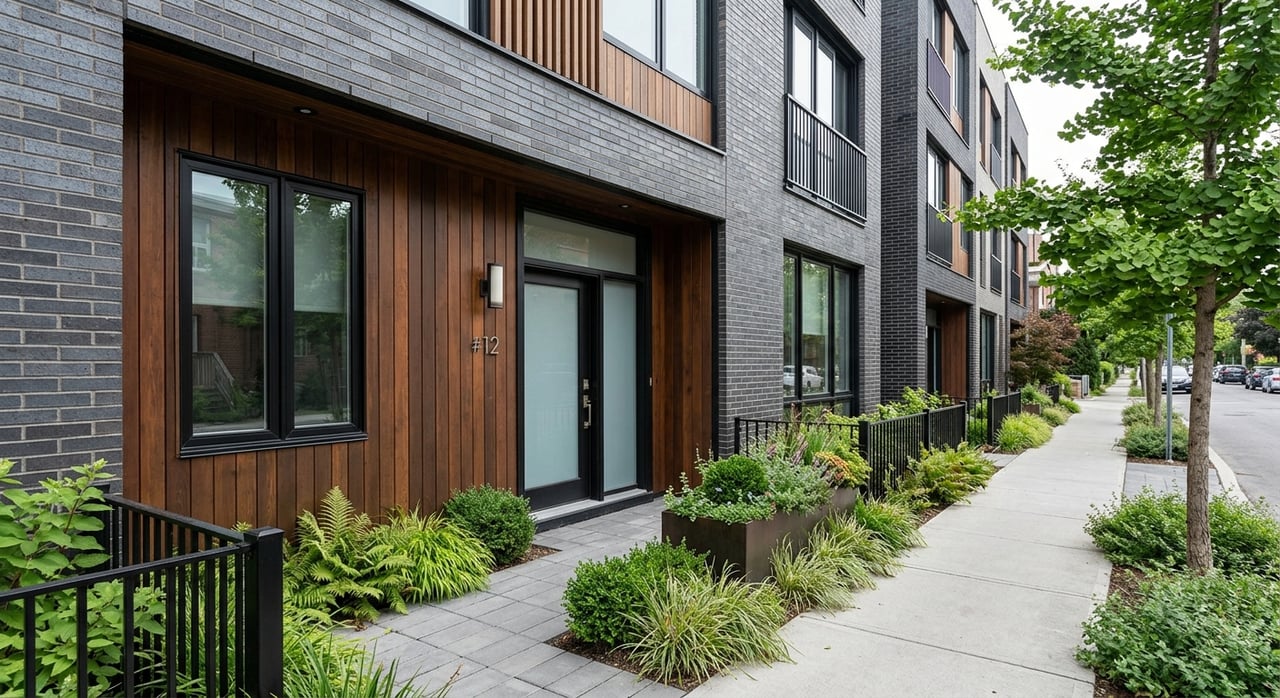
If you are picturing a downtown filled mostly with single-family homes, that is not the current pattern. The immediate downtown mix leans strongly toward apartments, mixed-use homes, and condo-style living. That aligns with the city’s planning approach, which encourages higher-density residential development in the core.
Existing examples support that trend. Two50 Downtown offers studio to three-bedroom apartments and includes amenities such as a resort-style pool, lounge deck, fitness center, balconies, and package pickup. Station Park Green is another mixed-use community with 599 homes, a public park, and ground-floor retail and office space.
In the active pipeline, downtown proposals include 28 for-sale condominium units at 230 South El Camino Real, 236 for-rent units in a 15-story mixed-use building at 1 East 4th Avenue, and 94 for-rent units at 616 South B Street with a fitness center, community room, and fourth-floor terrace. That mix suggests buyers should expect multifamily housing to remain the dominant product in and around the core.
Townhomes appear more often as you move into nearby San Mateo corridors rather than the immediate downtown core. In adjacent areas, proposals include 139 townhome units at 640-690 Concar Drive and 29 townhomes at 477 East Hillsdale Boulevard.
For you as a buyer, that means your home search strategy may depend on your priorities. If you want maximum walkability and direct downtown access, apartments and condos will likely dominate your options. If you want more townhome-style inventory, you may find more choices just outside the core.
Downtown San Mateo living often comes with a specific set of lifestyle features. On the neighborhood side, common advantages include walk-to dining, outdoor seating areas, transit access, bike infrastructure, and public parking. Those factors shape the day-to-day experience as much as the home itself.
On the building side, newer communities often include amenities that support convenience and comfort. Based on current examples and proposals, that can include pools, fitness centers, terraces, lounge spaces, balconies, package services, and community rooms. Not every building will offer the same package, but these features are common in the product mix.
That combination is one reason downtown appeals to buyers who want an easier, lower-maintenance lifestyle. You may be trading yard space for location efficiency, building amenities, and a more connected daily routine.
Downtown San Mateo can be a strong fit if you want a neighborhood where transit, dining, and day-to-day activity are all close together. It is especially compelling if you value a walkable environment, a compact urban core, and housing options that support a lock-and-leave lifestyle.
It may also appeal to buyers who want to stay on the Peninsula while keeping access to rail and a lively downtown setting. Because the housing mix leans toward apartments, condos, and mixed-use development, it is often a practical match for buyers looking for convenience and location over larger lot size.
If your goal is more interior space, a townhome layout, or a different residential setting, nearby San Mateo corridors may offer a better fit while still keeping you close to downtown. The key is matching your lifestyle priorities to the right micro-location.
If you are weighing downtown San Mateo against other Peninsula neighborhoods, local guidance can help you compare not just price points, but also commute patterns, building types, and the tradeoffs between walkability and space. If you want help identifying the right fit, reach out to Nick Villanueva for thoughtful, local guidance tailored to your goals.
Explore additional blogs for helpful tips and real estate knowledge.

Partner with Nick Villanueva for expert guidance, trusted service, and results that matter.
GET IN TOUCH
NICK VILLANUEVA | CA DRE# 02147224
ADDRESS 2 TOWER PL STE 1380 SOUTH SAN FRANCISCO CA 94080